How to Read a Pigeon Pedigree? A Step-by-Step Guide
1. Recognizing the generation structure
A standard pedigree starts with the bird itself on the left and folds outward to the right: the number of boxes doubles with every generation. The upper branch always follows the father's line, the lower branch the mother's line — this layout is nearly universal across countries and federations, so you can read even a foreign pedigree with the same logic.
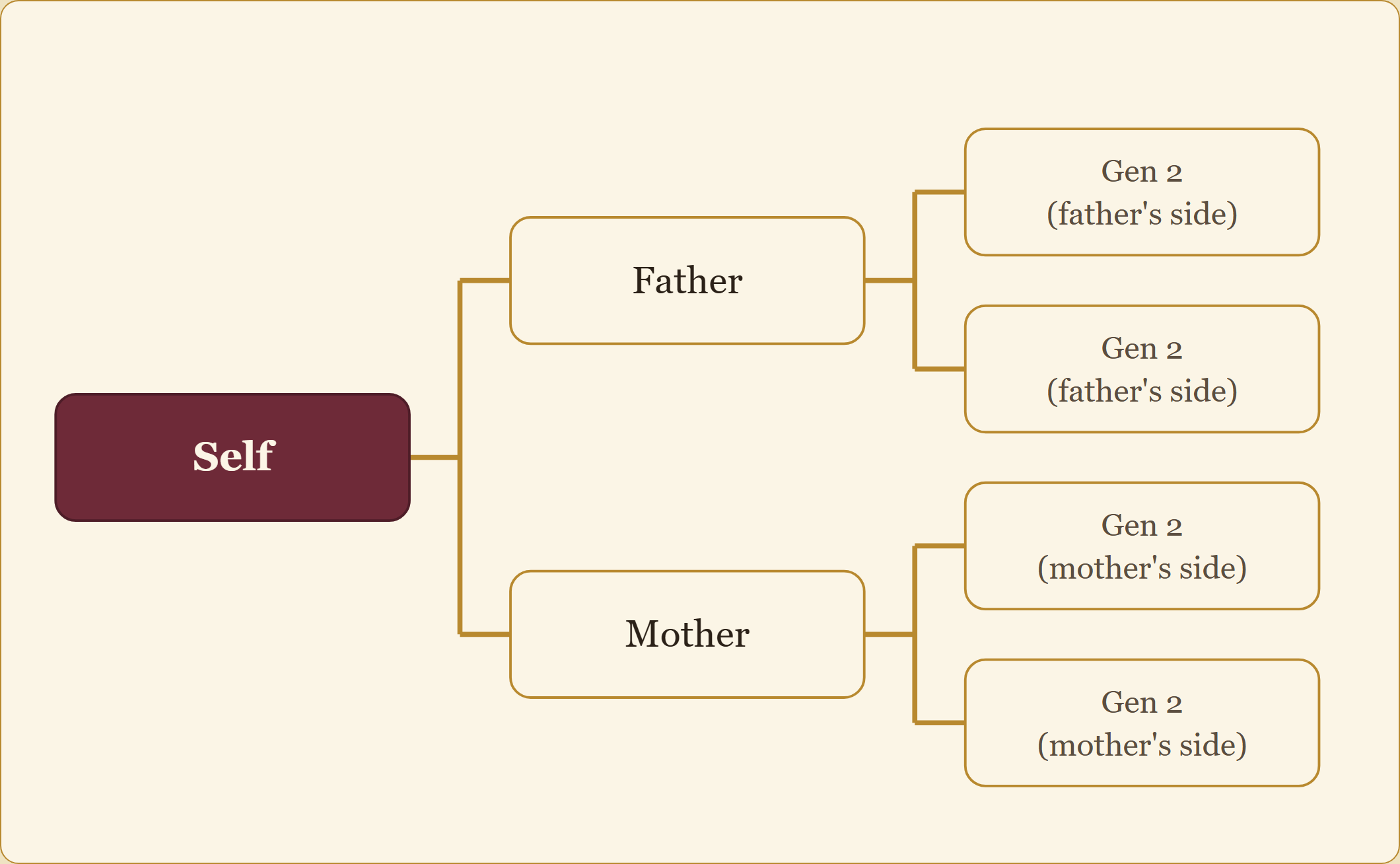
So a complete 4-generation pedigree holds information on the bird itself + 2 + 4 + 8 + 16 = 31 birds.
2. Decode the ring number
Each box usually shows a ring number in this format: country code – year – serial number (example: TR 2021 04582). These three tell you three different things:
- Country code: the federation/country where the bird was ringed (TR = Turkey).
- Year: the bird's birth/ringing year — as you go up the pedigree toward ancestors, the years should get smaller; this is a simple consistency check.
- Serial number: the unique record number within that year — it distinguishes different birds from the same breeder.
Practical tip: If the years don't get smaller as you move from ancestor to descendant (for example, the year in the "grandfather" box is more recent than the one in the "father" box), that's a sign the boxes were placed incorrectly or there was a copying error.
Breed and color information
Below the ring number you'll usually find the bird's breed (strain/line) and feather color — "Blue Bar", "Red", "Black" and so on. In racing lines, the breed field may instead show the name of a well-known bloodline (see below).
3. Recognizing the bloodline
Especially in racing pigeons, instead of a breed name you'll often see the name of a famous breeding line in the breed field — Belgian lines like Janssen, Van Loon, and the Dutch Jan Aarden are recognized worldwide. A bird's bloodline tells you which breeding program it comes from, known for certain performance traits such as short-distance speed or long-distance stamina. Seeing the same line name repeat across several boxes in a pedigree ("line-breeding") is a sign the breeder is deliberately trying to fix that line's traits.
4. Check the breeder information
Each box usually also includes a breeder's name. This is valuable in two ways: it helps you verify the bird's actual origin, and it tells you who to contact later if a question comes up about that line.
5. From paper pedigree to digital pedigree
The biggest problem with traditional paper/PDF pedigrees is that mistakes or missing information are hard to fix once discovered, and hand-filled boxes often cause readability issues. In a digital system like Pedigre Pro, each box is a separate record, so ring number/color/breed information is verified automatically, inconsistencies like a mismatched year between ancestors are easy to spot, and the pedigree can be shared as a PDF/PNG with a single click — no need to redraw it by hand.
Summary
- The box in the middle is the bird itself; moving left/right takes you to its ancestors.
- The year in the ring number should get smaller as you move toward ancestors.
- A line name in the breed field (Janssen, Van Loon, etc.) indicates the bird's performance lineage.
- Breeder information is a separate reference point for verifying origin.
Frequently Asked Questions
Why should the years get smaller toward the ancestors in a pedigree?
Every bird comes from parents born before it; if an ancestor's ring year is more recent than its descendant's, that's a sign the boxes were placed incorrectly or there was a copying error.
What does Janssen or Van Loon in the breed field mean?
These aren't breeds — they're the names of world-renowned breeding lines (bloodlines); they show which performance-oriented breeding program the bird comes from.
How many generations of pedigree is considered enough?
In the racing community, 4 generations (the bird itself + 31 ancestors) is considered standard; some serious breeders keep records up to 5 generations.